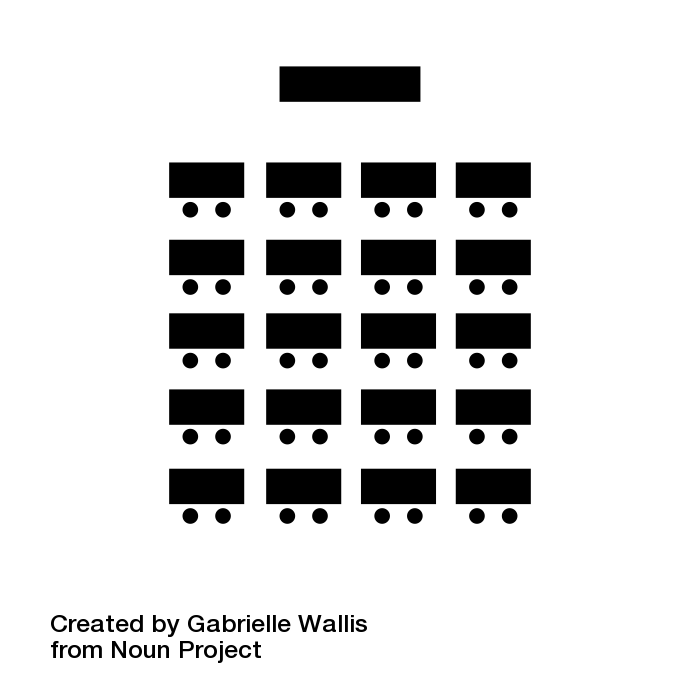
In the hustle and bustle of a classroom, the seating plan might seem like a trivial detail, but its impact on learning outcomes and student engagement cannot be overstated. I have had years of trialling different layouts, ability groupings, behaviour groupings and still it remains an important consideration for me every term. A well-thought-out seating plan can not only enhance the classroom environment, but can directly bolster teaching & learning.
The design
In crafting a classroom seating plan, the initial questions are usually the following: Rows? Group tables? Horse shoe? Carpet spaces? etc.
For me, rows are my go to because it guarantees all children are facing forward and no one becomes disadvantaged with awkward viewing angles and/or twisted necks!
Ensuring that everyone faces the front of the room fosters a sense of unity and collective attention. This arrangement encourages active listening and facilitates smoother transitions between instructional activities. Additionally, facing forward reduces the likelihood of distractions and side conversations, allowing students to fully immerse themselves in the lesson at hand.
However, although maintaining a default layout with everyone facing the front provides certainty for pupils, routines can be implemented to facilitate group work or accommodate varying abilities. I’ve had it where my class at the time knew the two tables that would be pushed together to make a group table and would do it in seconds and swap seats without any fuss. I’ve had it where children swapped seats for different subjects; and I’ve had it where children rotated with different partners because they needed to develop confidence and oracy skills with each other. Whatever the need, heavy investment in routines were my answer.
Viewing angles
If you have the option or even the opportunity to discuss where your main board/ screen is placed, I would always vote for a narrow, longer classroom than short and wide.
Shortening the peripheral distance from the class screen is crucial for maintaining children’s focus during lessons. Screens are often big enough to project to the back of the room. There’s less chance of glare and distraction, such as reflections on windows or shiny surfaces, and it supports students’ visual comfort and concentration.
Eliminate the distraction
Sit in the different seating positions once in a while and you’ll be amazed with what you see (it’s not what you thought).
By minimising distractions and ensuring clear visibility for all, we create an environment conducive to active participation and learning. Remove that Twinkl poster that everyone’s forgotten is there and get rid of that hanging display piece. Whether it’s a projector screen or a whiteboard, centralizing the focal point clear from obstruction promotes equal access to information for everyone.
Not only equal access, but it will maximise children’s receptiveness to learning, reducing their day-to-day cognitive battles. By creating a classroom environment that is free from unnecessary visual and auditory stimuli, students can focus their attention more effectively on the task at hand. This thoughtful approach to design not only enhances concentration but also promotes a sense of calm and well-being among all. Reducing cognitive load through intentional classroom layout and organization helps pupils allocate more mental resources to absorbing new information and engaging with learning materials. As a result, they are better equipped to retain knowledge, develop critical thinking skills, and ultimately thrive academically. I have mentioned in my previous blog (Visualiser) how I firmly believe keeping the visualiser for my teaching at the back (or side) of the room – this ensures I don’t become the distraction when teaching and they remain fully focused on what I am displaying before them.
Viewing positions for individuals
Where you decide to place children does not have to be forever; in fact, regular rotation around the room can be healthy and fair for all.
Placing pupils who may need additional support closer to the teacher allows for more frequent check-ins and assistance; or equally designating another part of the room which may be better equipped with resources and space might be better. This thoughtful arrangement also facilitates targeted instruction for focused groups (completing the circuit), as adults can strategically position themselves to provide timely feedback and guidance.
Teachers’ cognitive load
But this doesn’t just benefit the children; it also significantly reduces the cognitive load on teachers. With an environment primed and ready for initial teaching, we can seamlessly transition between instructional activities without having to constantly manage disruptions or rearrange seating arrangements. By proactively addressing potential distractions and optimising classroom layout, teachers can focus more on delivering high-quality instruction and responding to the diverse needs of their students. This streamlined approach not only enhances teacher efficiency but also enables more responsive teaching. You’re less likely having to fire fight the daily battles of Betsy not being able to see all of the board; Harry getting distracted by what’s outside; Liam with high needs being the farthest away from you; and Kevin not following your instructions as he didn’t focus on your whole model. You can devote more time and energy to monitoring progress, providing individualised support, and adapting instruction in real-time. As a result, both teachers and pupils benefit from a learning environment that is conducive to meaningful interactions and optimal learning outcomes.
Physiological conditions
But even with the greatest layout, children still need to be in the right conditions for learning to take place. It entails ensuring that the physical environment is conducive to concentration and engagement. This includes the following:
– regulating temperature to ensure it’s neither too hot nor too cold, as extreme temperatures can negatively impact students’ ability to focus.
– Good lighting is essential for creating an inviting atmosphere and reducing eye strain, which can affect students’ comfort and alertness.
– Adequate airflow is also crucial for maintaining optimal oxygen levels in the classroom, as fresh air circulation helps prevent drowsiness and promotes cognitive function. Many schools now utilise carbon dioxide monitors to ensure proper ventilation. While some of these factors may be beyond your control, being aware of them and advocating for conducive learning conditions is a fundamental element of creating a positive and productive classroom.
“Visitors”
When visitors enter the classroom, they often gravitate towards the side they enter from, scanning the room’s perimeter. When you walk into a room and observe, do you encroach on the learning space? Or do you stay on the side? And when you speak to pupils for their voice, do you find yourself often asking someone either on the end of the row nearest to you, or around the back? Or do you actually go to someone in the middle or other side.
Depending on your thoughts on this may also inform where you place your pupils.
Safety
Whatever you decide, it is imperative to consider the flow of traffic in and out of the room. By strategically positioning desks and creating clear pathways, we can minimise disruptions and maintain a conducive learning environment, whilst ensuring an unobstructed exit for evacuation which is a safety necessity – this is the where we must balance functionality with design aesthetics.
By incorporating these considerations into our classroom seating plan, we create an environment that maximises learning potential and cultivates a sense of belonging for everyone. From optimising visibility to fostering flexibility, every aspect of the seating arrangement plays a vital role in shaping the educational experience. Prioritise the thoughtful design and inclusivity to pave the way for enhanced engagement, collaboration, and academic success.
Discover more from Teacher Out Loud
Subscribe to get the latest posts sent to your email.
 Teacher Out Loud